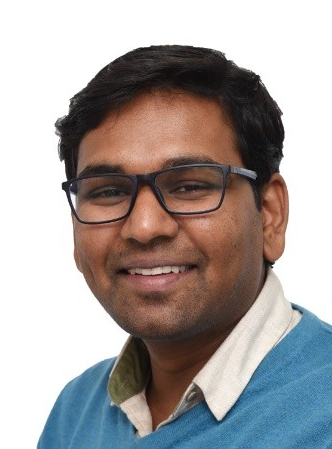
Building a soft matter group
Developing a research group at SLAC that uses synchrotrons and free-electron lasers to study soft and disordered materials.
I am an Associate Staff Scientist at SLAC National Accelerator Laboratory and Stanford University, where I am building a soft matter research group that uses large-scale facilities such as synchrotrons and free-electron lasers. My research focuses on understanding plastic deconstruction and recycling through chemical and biological pathways, and on developing autonomous, data-driven X-ray scattering methods for polymers and soft materials. By combining in situ and operando scattering with real-time analysis, AI/ML and adaptive measurement strategies, my work aims to accelerate the discovery of structure–reactivity and structure–property relationships.
I earned my Ph.D. in Biomedical Engineering from the Swiss Federal Laboratories for Materials Science and Technology (Empa) and the University of Bern, where my research applied materials science approaches to biomedical systems. I completed the Erasmus Mundus Master's program in Materials Science Exploring Large Scale Facilities (MaMaSELF), studying at the University of Rennes 1 in France and the Technical University of Munich in Germany, and hold a B.Tech. in Engineering Physics from the Indian Institute of Technology Guwahati, India.
This work sits between sustainable materials chemistry and X-ray methods development: understanding how polymers come apart and can be rebuilt, and building the autonomous experiments that make those structural measurements fast enough to guide materials design directly.
Developing a research group at SLAC that uses synchrotrons and free-electron lasers to study soft and disordered materials.
Integrating AI and machine learning with X-ray capabilities at SSRL, so a measurement can decide what to measure next.
Following catalytic deconstruction of polyethylene and polystyrene as it happens, to understand what controls how a plastic comes apart.




My work uses X-ray scattering to understand how the structure of soft materials governs their reactivity and properties, and to build the automated, data-driven experiments that make those questions tractable at scale.
Resolving how polymer morphology controls solvent and catalyst accessibility during catalytic autoxidation of polyethylene and polystyrene, and how mixed polyesters can be returned to monomer in closed-loop chemical recycling. In situ SAXS/WAXS during reaction links nanoscale structure to deconstruction mechanism.
Following particle formation from solution as it happens. Reagents are mixed in a microfluidic cell in the beam, so SAXS resolves the induction period, nucleation and early growth, with position along the channel setting the time axis. Used to build quantitative growth kinetics for iron oxide and related systems.
Pump–probe X-ray scattering at LCLS (XPP) probing transient melting and structural dynamics in metal films, and time-resolved studies using split-and-delay optics.
Quantitative structure–property relationships in electrospun and thermally drawn fibers, nanocellulose aerogels, and mineralized tissues, connecting molecular orientation and semicrystalline order to mechanical and functional behavior across length scales.
Building autonomous platforms at SSRL that integrate X-ray capabilities with AI/ML. Python pipelines perform real-time data reduction, correction, and analysis, enabling closed-loop and active-learning workflows that let a measurement decide what to measure next.
SAXS, WAXS, XAS, ultrafast pump–probe diffraction, in situ and operando measurement
Electrospinning, melt-spinning, microfluidics, spin coating, 3D printing, CVD and evaporation thin films
Python, MATLAB, real-time SAXS/WAXS pipelines, beamline automation, FEM and DFT modeling
TOPAS, ATSAS, NIKA, FIT2D, GIXGUI, DPDAK, SasView, SASfit, BioXTAS RAW, PyMOL, Fusion 360
Live metrics via OpenAlex. Full profiles below.
Anjani K. Maurya, Ravikumar Ramegowda, Arun S. Asundi, Ozge D. Bozkurt, Katrina Knauer, Christopher J. Tassone; “Decoding the structural deformation behavior of redesigned bioplastics”.
Arun S. Asundi, Anjani K. Maurya, Brandon Frey, Kyle Wist, Ozge D. Bozkurt, Hannah M. Alt, Gregg T. Beckham, Christopher J. Tassone, Ritimukta Sarangi; “Effect of Water on Co Chemistry and Polymer-Solvent Interactions in Aerobic Oxidative Polyethylene Deconstruction” (in preparation).
Taekeun Yoon, Haoyuan Li, Yanwen Sun, Arijit Majumdar, Priyanka Muhunthan, Guillaume Vignat, Sanghoon Song, Jingcun Fan, Selene She, Takahiro Sato, Aliaksei Halavanau, Alberto Lutman, Yuxuan Li, Anjani K. Maurya, Diling Zhu, Matthias Ihme; “Revealing Ultrafast Multiscale Dynamics of Liquid CO2 Radiolysis with Time-Resolved X-ray Pump/X-ray Probe Scattering using Split-and-Delay Optics” (2026).
Anjani K. Maurya, Arun S. Asundi, Sarah A. Hesse, Amani M. Ebrahim, Kevin P. Sullivan, Joel Miscall, Jocelyn A. Richardson, Simon R. Bare, Ritimukta Sarangi, Gregg T. Beckham, Christopher J. Tassone; “Effects of Polymer Morphology on Solvent and Catalyst Accessibility during Polyethylene and Polystyrene Autoxidation” JACS Au, 6, 2891–2901 (2026).
View articleAnjani K. Maurya, Arun S. Asundi, Ozge D. Bozkurt, Katrina M. Knauer, Simon R. Bare, Christopher J. Tassone; “Polymer Deconstruction and Redesign Strategies for Plastics Recycling” Advanced Materials Technologies, 11, 2502008 (2026).
View articleJulia B. Curley, Yuanzhe Liang, Jason S. DesVeaux, Taylor Uekert, Hoon Choi, Ryan W. Clarke, William E. Michener, Anjani K. Maurya, Lisa M. Stanley, Yue Wu, Sarah A. Hesse, Andrea L. Baer, Hudson A. Neyer, Christopher J. Tassone, Alan J. Jacobsen, Ofei D. Mante, Gregg T. Beckham, Katrina M. Knauer; “Closed-loop recycling of mixed polyesters via catalytic methanolysis and monomer separations” Nature Chemical Engineering, 2, 568–580 (2025).
View articleJessica Lusty Beech, Anjani K. Maurya, Ronivaldo da Silva, Emmanuel Akpoto, Arun Asundi, Julia Ann Fecko, Neela Yennawar, Ritimukta Sarangi, Thomas Weiss, Christopher J. Tassone, Jennifer L. DuBois; “Understanding the stability constraints on a plastic-deconstructing Rieske iron oxidoreductase system” Protein Science, 33(6), e4997 (2024).
View article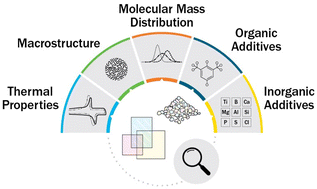
Amy A. Cuthbertson, Clarissa L. Lincoln, Joel Miscall, Lisa M. Stanley, David Moore, Anjani K. Maurya, Arun S. Asundi, Christopher J. Tassone, Nicholas A. Rorrer, Gregg T. Beckham; “Characterization of polymer properties and identification of additives in commercially available research plastics” Green Chemistry, 26, 7067–7090 (2024).
View article
Arun S. Asundi, Amani M. Ebrahim, Anjani K. Maurya, Chad T. Palumbo, Kevin P. Sullivan, Gregg T. Beckham, Ritimukta Sarangi; “Effect of Ligand Chemistry on Electronic Properties and Reactivity of Cobalt Acetate Autoxidation Catalysts” The Journal of Physical Chemistry C, 127(32), 15797–15808 (2023).
View article
Makenna L. Pennel, Anjani K. Maurya, Amani M. Ebrahim, Christopher J. Tassone, Matteo Cargnello; “Intrinsic activity of silica-alumina for the conversion of polyethylene into tunable aromatics below pyrolytic temperatures” ACS Sustainable Chemistry & Engineering, 11(34), 12623–12630 (2023).
View article
Fernando Vazquez Luna, Anjani K. Maurya, Juliana Martins de Souza e Silva, Guido Dittrich, Theresa Paul, Dirk Enke, Patrick Huber, Ralf Wehrspohn, Martin Steinhart; “Straight versus Spongy: Effect of Tortuosity on Polymer Imbibition into Nanoporous Matrices Assessed by Segmentation-Free Analysis of 3D Sample Reconstructions” The Journal of Physical Chemistry C, 126(30), 12765–12779 (2022).
View article
Deeptanshu Sivaraman, Gilberto Siqueira, Anjani K. Maurya, Shanyu Zhao, Matthias M. Koebel, Gustav Nyström, Marco Lattuada, Wim J. Malfait; “Superinsulating nanocellulose aerogels: Effect of density and nanofiber alignment” Carbohydrate Polymers, 292, 119675 (2022).
View articleJ. Schoeller, J. T. Avaro, Anjani K. Maurya, R. M. Rossi, A. Neels; “Tailoring Fibre Structure Enabled by X-ray Analytics for Targeted Biomedical Applications” Chimia, 76, 229 (2022).
View article
Robin M. Cywar, Nicholas A. Rorrer, Heather B. Mayes, Anjani K. Maurya, Christopher J. Tassone, Gregg T. Beckham, Eugene Y.-X. Chen; “Redesigned Hybrid Nylons with Optical Clarity and Chemical Recyclability” Journal of the American Chemical Society, 144(12), 5366–5376 (2022).
View article
N. Iranpour, M. Liebi, Q. Ong, C. Blanchet, Anjani K. Maurya, F. Stellacci, S. Salentinig, P. Wick, A. Neels; “In-situ Investigations on Gold Nanoparticles Stabilization Mechanisms in Biological Environments Containing HSA” Advanced Functional Materials, 32, 2110253 (2022).
View article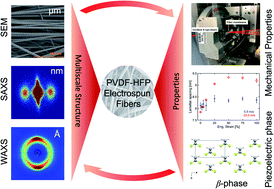
Anjani K. Maurya, Eloïse Mias, Jean Schoeller, Giuseppino Fortunato, René M. Rossi, Alex Dommann, Antonia Neels*; “Multiscale structural decoding of electrospun fibers: from fabrication to possibilities for steering properties” Nanoscale Advances, 4, 491–501 (2022).
View article
Inès Richard, Anjani K. Maurya, Shahrzad Shadman, Eloïse Masquelier, Lison Sylou Marthey, Antonia Neels, Fabien Sorin; “Unraveling the influence of polymer chain orientation on the thermo-mechanical properties of thermally drawn fibers” Small, 18, 2101392 (2022).
View article
Anjani K. Maurya, Annapaola Parrilli, Tatiana Kochetkova, Jakob Schwiedrzik, Alex Dommann, Antonia Neels*; “Multiscale and multimodal X-ray analysis: Quantifying phase orientation and morphology of mineralized turkey leg tendons” Acta Biomaterialia, 129, 169–177 (2021).
View article
Anjani K. Maurya, Sumit Mondal, Dean E. Wheeldon, Jean Schoeller, Michel Schmid, Simon Annaheim, Martin Camenzind, Giuseppino Fortunato, Alex Dommann, Antonia Neels, Amin Sadeghpour, René M. Rossi; “Effect of radiant heat exposure on structure and mechanical properties of thermal protective fabrics” Polymer, 222, 123634 (2021).
View article
Dambarudhar Parida, Khalifah Salmeia, Amin Sadeghpour, Shanyu Zhao, Anjani K. Maurya, Eva Moreau, Robin Pauer, Sandro Lehner, Milijana Jovic, Sabyasachi Gaan; “Template free synthesis of hybrid mesoporous silica nanoparticle with phosphonic acid functionality for efficient methylene blue removal” Materials & Design, 201, 109494 (2021).
View article
Ivana Malagurski, Ruggero Frison, Anjani K. Maurya, Antonia Neels, Boban Andjelkovic, Ramsankar Senthamaraikannan, Ramesh Babu Padamati, Kevin O’Connor, Tomasz Witko, Daria Solarz, Jasmina Nikodinovic-Runic*; “Polyhydroxyoctanoate Films Reinforced with Titanium Dioxide Microfibers for Biomedical Application” Materials Letters, 285, 129100 (2020).
View article
Tatiana Kochetkova*, Cinzia Peruzzi, Oliver Braun, Jan Overbeck, Anjani K. Maurya, Antonia Neels, Michel Calame, Johann Michler, Philippe Zysset, Jakob Schwiedrzik*; “Combining polarized Raman spectroscopy and micropillar compression to study microscale structure-property relationships in mineralized tissues” Acta Biomaterialia, 119, 390–404 (2021).
View article
N. D. Tien, Anjani K. Maurya, G. Fortunato, M. Rottmar, R. Zboray, R. Erni, A. Dommann, R. M. Rossi, A. Neels, A. Sadeghpour*; “Responsive Nanofibers with Embedded Hierarchical Lipid Self-Assemblies” Langmuir, 36(40), 11787–11797 (2020).
View articleArushi Jain, Anjani K. Maurya, Leonie Ulrich, Michael Jaeger, René M. Rossi, Antonia Neels, Philippe Schucht, Alex Dommann, Martin Frenz, H. Günhan Akarçay; “Polarimetric imaging in backscattering for the structural characterization of strongly scattering birefringent fibrous media” Optics Express, 28, 16673–16695 (2020).
View article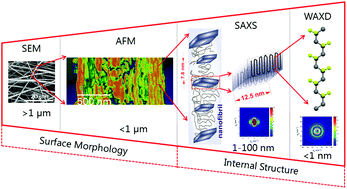
Anjani K. Maurya, Lukas Weidenbacher, Fabrizio Spano, Giuseppino Fortunato, René M. Rossi, Martin Frenz, Alex Dommann, Antonia Neels*, Amin Sadeghpour*; “Structural insights into semicrystalline states of electrospun nanofibers: a multiscale analytical approach” Nanoscale, 11, 7176–7187 (2019).
View article
Nitin Saxena, Josef Keilhofer, Anjani K. Maurya, Giuseppino Fortunato, Jan Overbeck, Peter Müller-Buschbaum*; “Facile Optimization of Thermoelectric Properties in PEDOT:PSS Thin Films through Acid–Base and Redox Dedoping Using Readily Available Salts” ACS Applied Energy Materials, 1(2), 336–342 (2018).
View articleSLAC-Stanford Battery Center Meeting
SLAC National Accelerator Laboratory, Menlo Park, USA
APS Global Physics Summit
Denver, USA
APS Spring Meeting
Anaheim, USA
ACS Spring Meeting
San Diego, USA
Bay-area Soft Matter Symposium
Stanford, USA
SAS2022 International Conference
Campinas, Brazil
European Powder Diffraction Conference (EPDIC17)
Šibenik, Croatia
Empa PhD Symposium 2020
Empa, St. Gallen, Switzerland
GCB Symposium
University of Bern, Switzerland
Empa PhD Symposium
Switzerland
Bioinspired Materials
Monte Verità, Switzerland
European Crystallography Meeting
University of Vienna, Austria
Swiss Crystallography Meeting
EPFL Sion, Switzerland
Empa PhD Symposium
Switzerland
Polycoll 2018
EPFL, Switzerland
Swiss Crystallography Meeting 2018
PSI, Switzerland
EXCITE Biomedical Imaging Summer School 2018
ETH Zurich, Switzerland
Bio-X
Empa St. Gallen, Switzerland
Empa PhD Seminar
Empa St. Gallen, Switzerland
Empa PhD Symposium 2017
Dübendorf, Switzerland
Swiss Crystallography Meeting 2017
Geneva, Switzerland
6th Energy Colloquium, Munich School of Engineering
TUM, Germany
Summer School
Austria
MaMaSELF Status Meeting
Rigi Kulm, Switzerland
DPG Meeting 2016
Regensburg, Germany
ICANN-2013
IIT Guwahati, India
Condensed Matter Days Conference 2011
Guwahati University, India
Practical resources gathered from working with SAXS and WAXS: the tools I reach for, the references worth reading, and the communities that maintain the standards. If you would like to talk through data, methods or analysis, please do get in touch.
D. S. Sivia. The clearest starting point for X-ray and neutron users: builds the theory from first principles without hiding behind formalism.
Structured lessons in SAXS and SANS, from first concepts through to advanced modeling.
A curated survey of the software people actually use for reduction and analysis.
Edge energies, cross-sections and attenuation lengths for planning an experiment.
Scattering lengths, densities and element data, scriptable for contrast calculations.
Azimuthal integration in Python: the workhorse for turning 2D detector images into I(q).
Reads and writes the many detector image formats you meet at beamlines.
Model fitting with a large library of form and structure factors.
The established suite for biological small-angle scattering.
Reduction and analysis built around bioSAXS workflows.
Reconstructs 3D electron density directly from a 1D SAXS curve.
Simulates scattering profiles from particle shapes you define.
The community effort behind small-angle scattering data standards and interoperability.
A directory and history of synchrotron and free-electron laser facilities worldwide.
The central hub for the global small-angle scattering community.
This list is far from complete, which is part of what keeps the field lively, and occasionally bewildering for newcomers. Suggestions are welcome.
Most of my measurements are made at large-scale facilities, usually with the sample held under a controlled environment while it reacts, deforms or flows. These are the beamlines I have worked on, and the questions each one is suited to. If you are a student curious about synchrotron work, or you have a sample that needs one of these techniques, I am glad to talk it through.
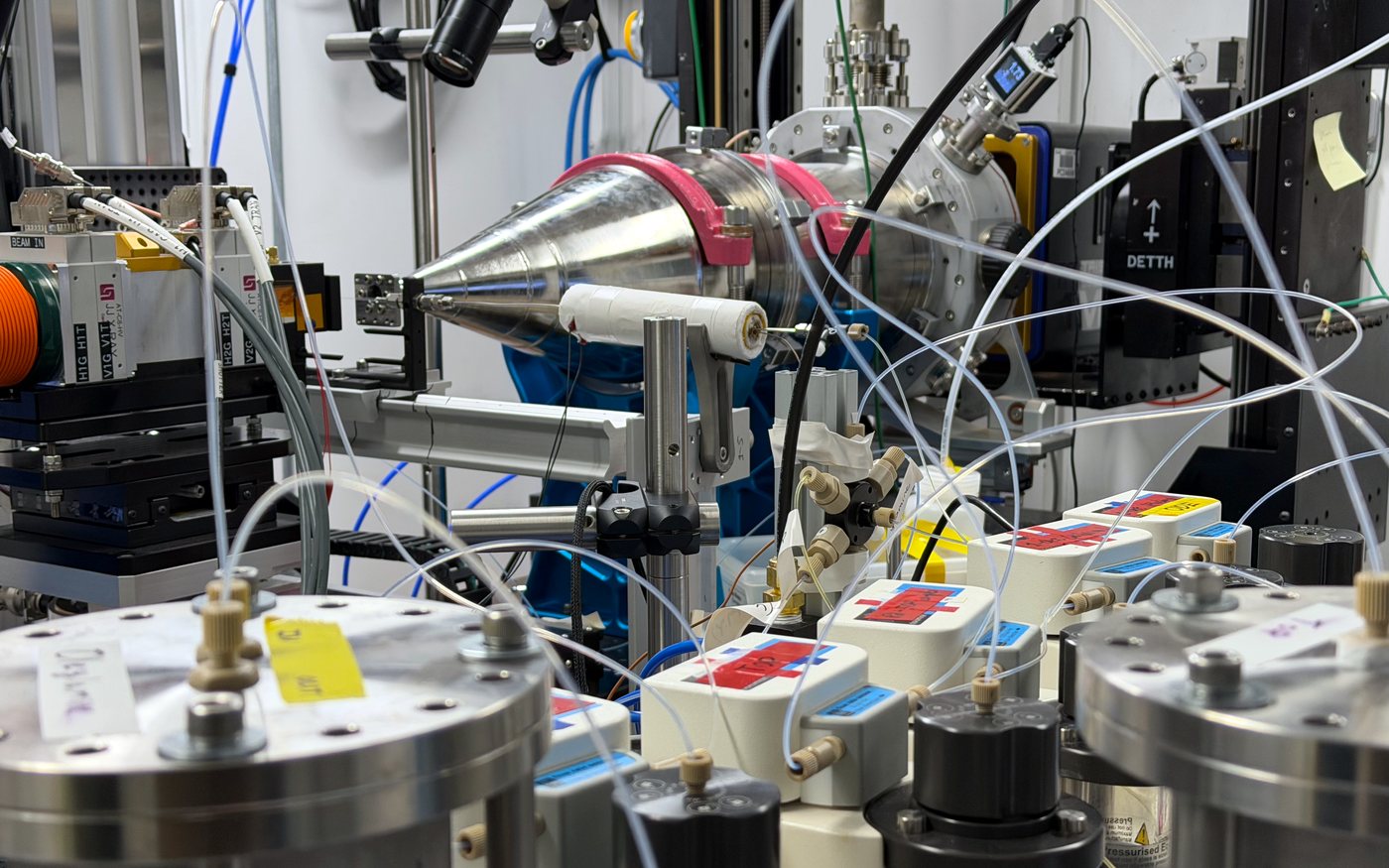
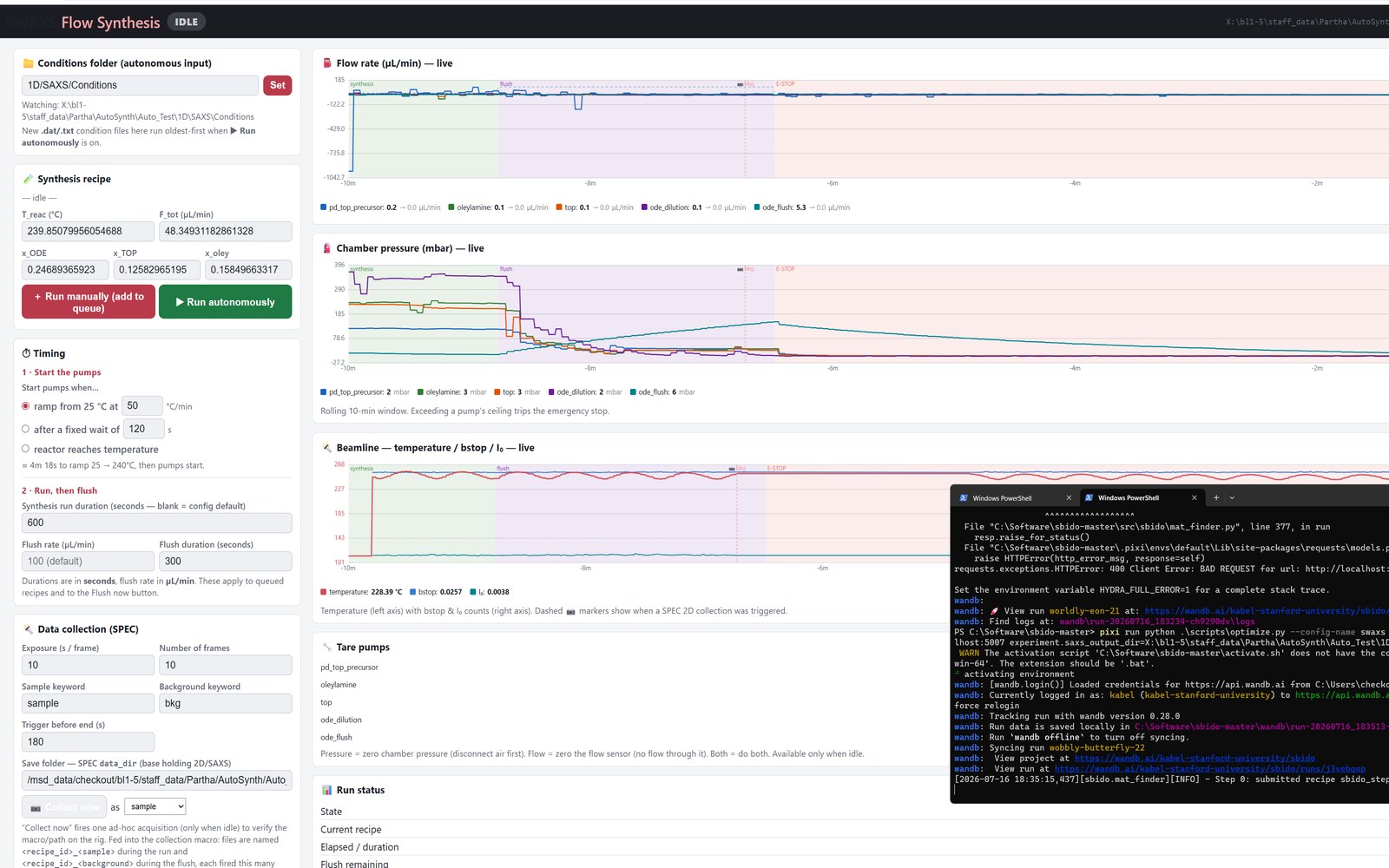
A closed-loop platform that synthesizes a material and measures it in the beam without a person in the loop. Precursors are pumped through a heated flow reactor sitting in the X-ray beam, SAXS is collected for every condition, reduced in real time, and the reduced result is fed back to an optimizer that selects the next set of synthesis parameters.
Built the platform: reactor integration, live flow, pressure and beamline monitoring, automated SPEC acquisition, and a pump-ceiling interlock that trips an emergency stop.
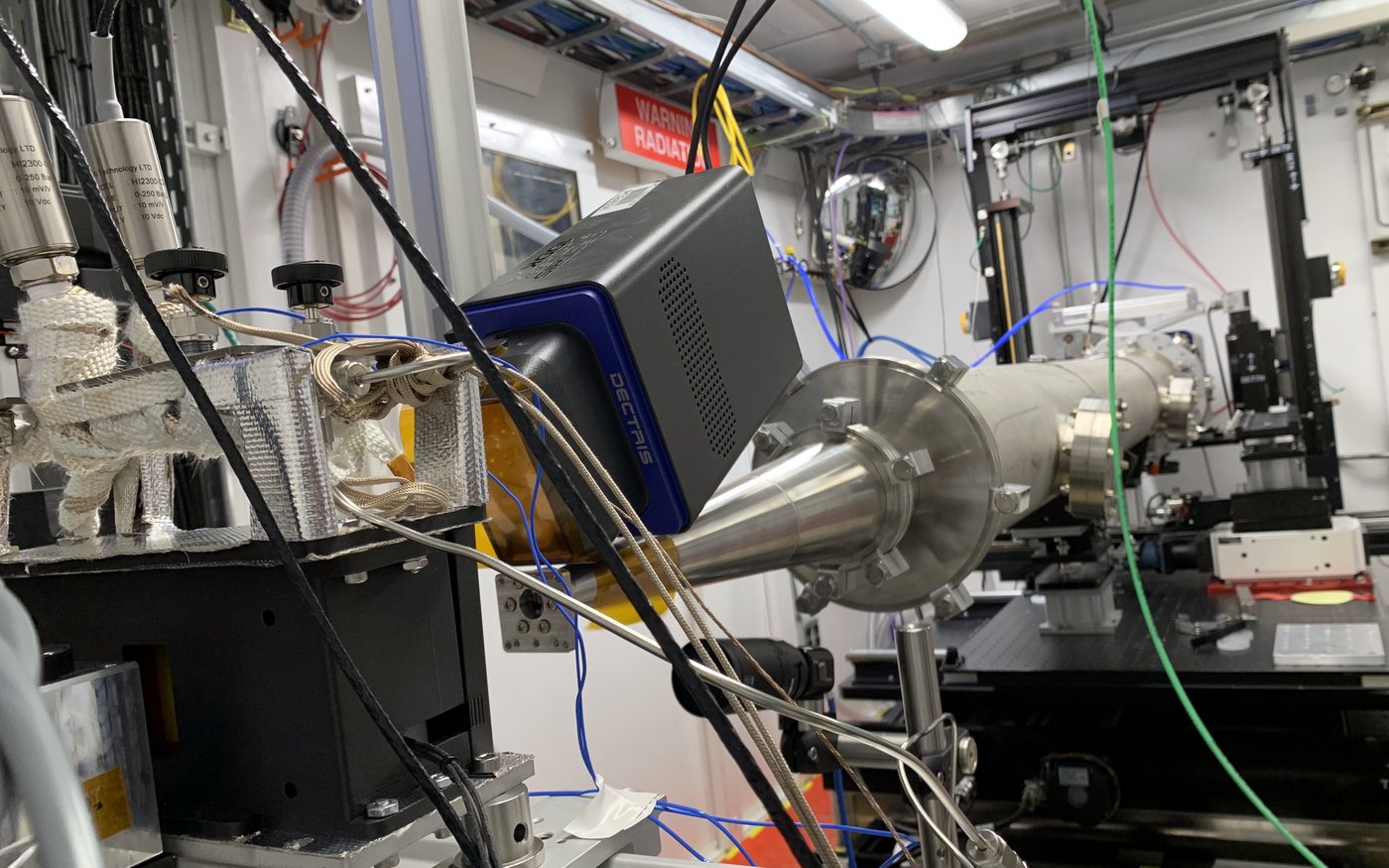
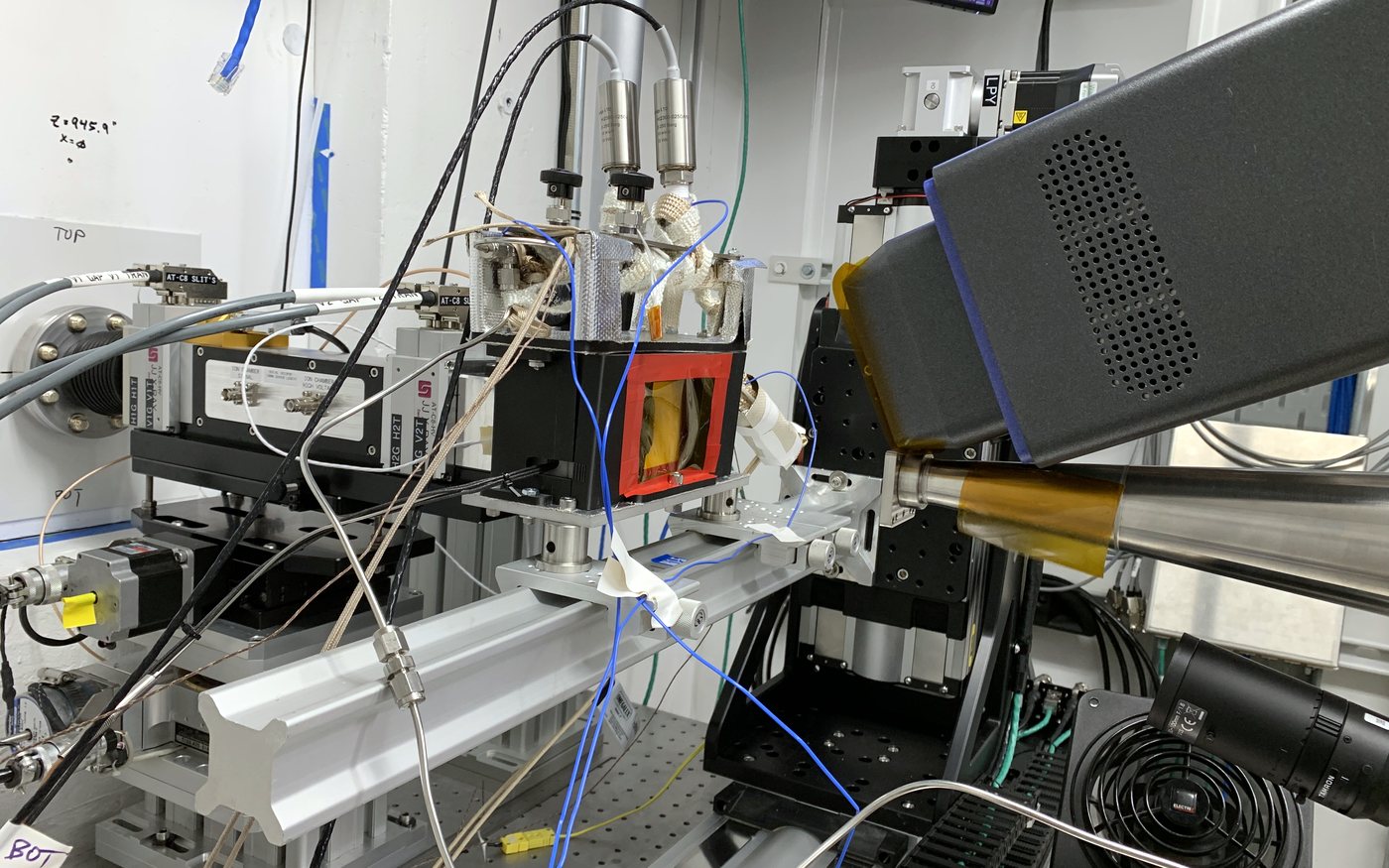
Simultaneous SAXS and WAXS on plastic during the reaction. Multiscale structural characterization of redesigned plastics.
Built the high-temperature, high-pressure capillary setup here
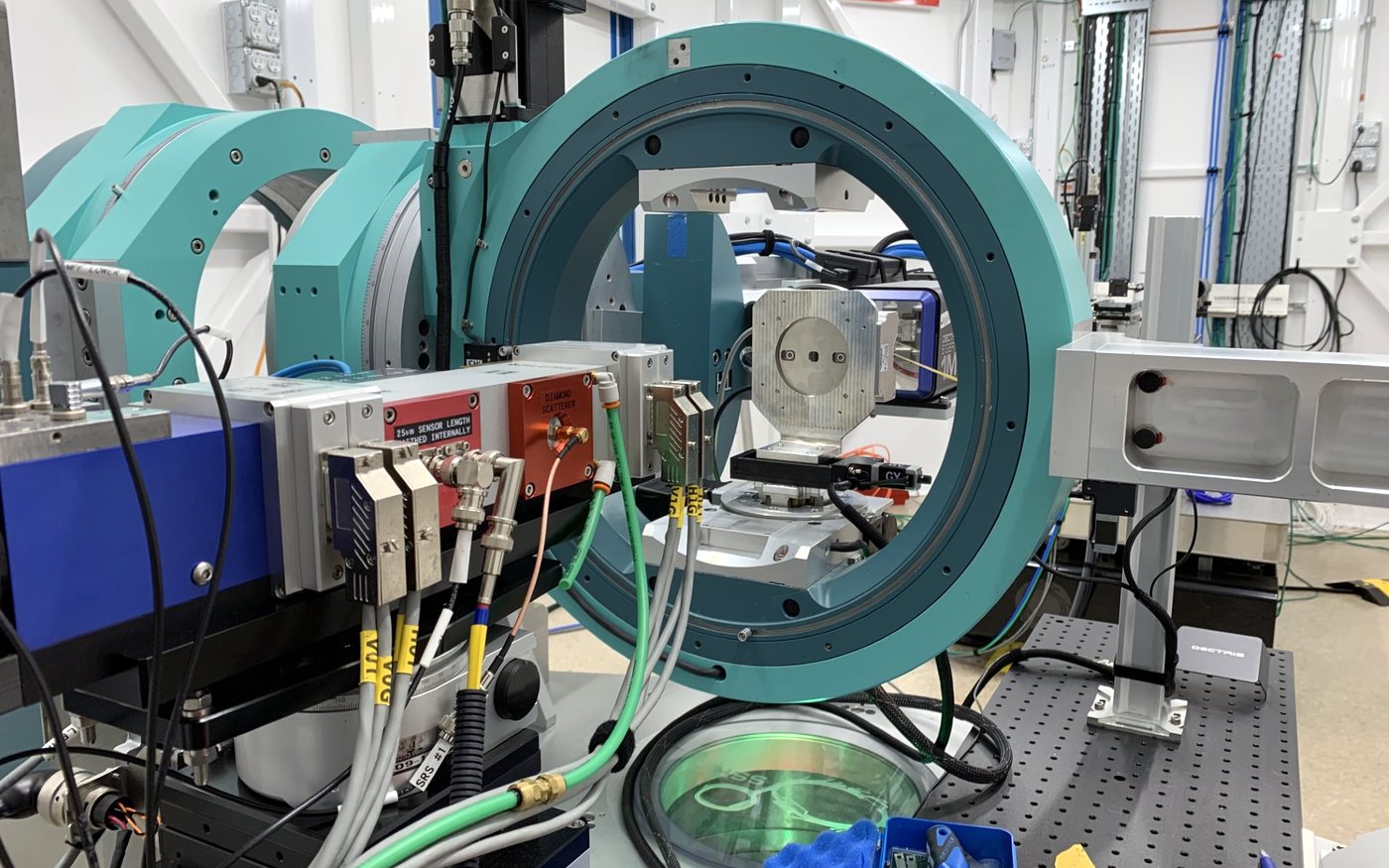
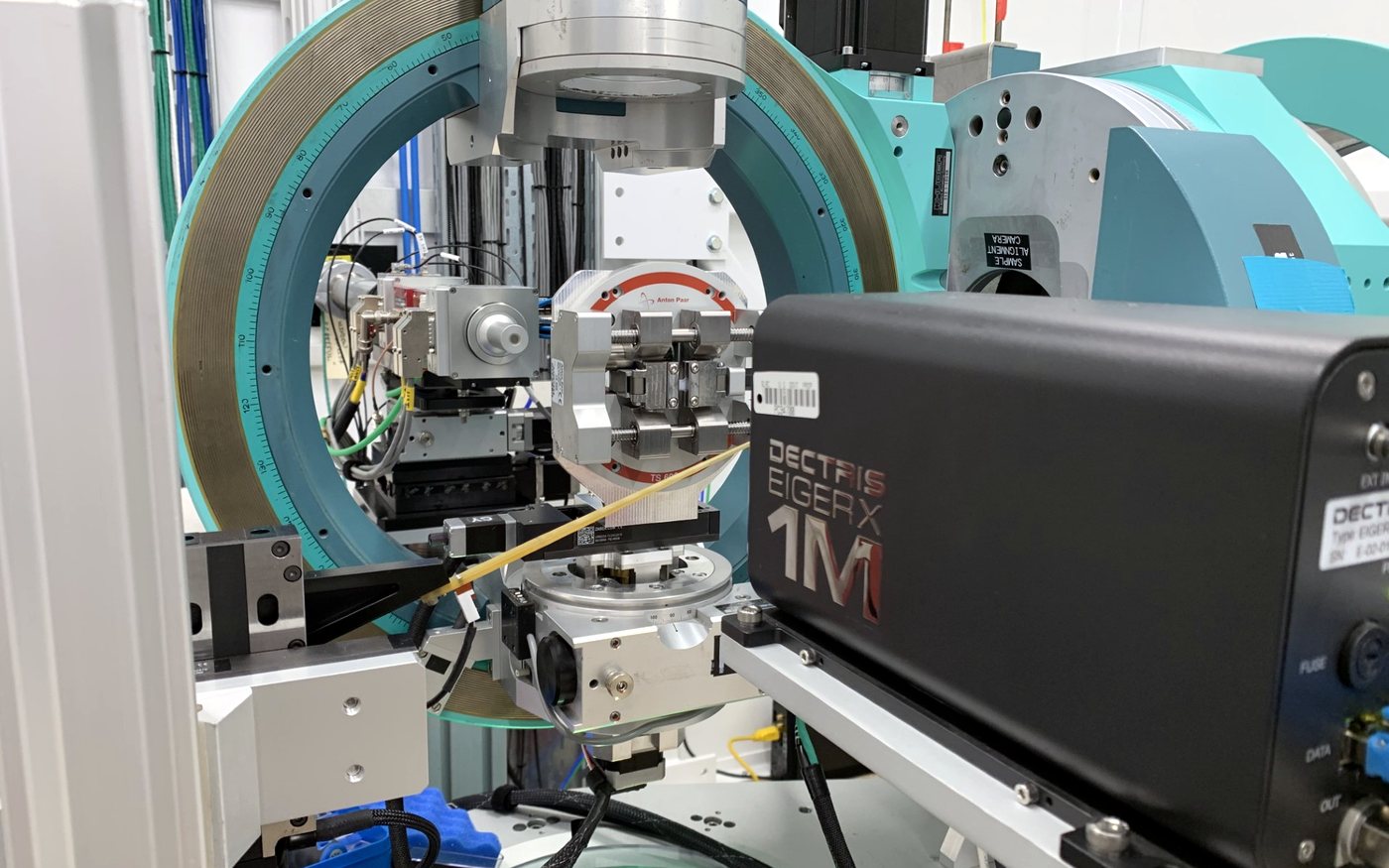
Scattering recorded under uniaxial load, so molecular orientation and lamellar order can be tracked as they develop against the stress–strain response.
Integrated an Anton Paar TS600 tensile stage for synchronised acquisition
Wide-angle diffraction for crystalline packing at the Ångström scale: phase identification, unit-cell spacings and degree of crystallinity in polymers and thin films.
Small-angle scattering over roughly the 1–100 nm range, covering particle size, shape and dispersity in solution for soft matter and biological samples.
X-ray absorption spectroscopy for the local environment and oxidation state of catalytic metal centers.
Absorption spectroscopy complementing the scattering work, tying electronic structure to reactivity.
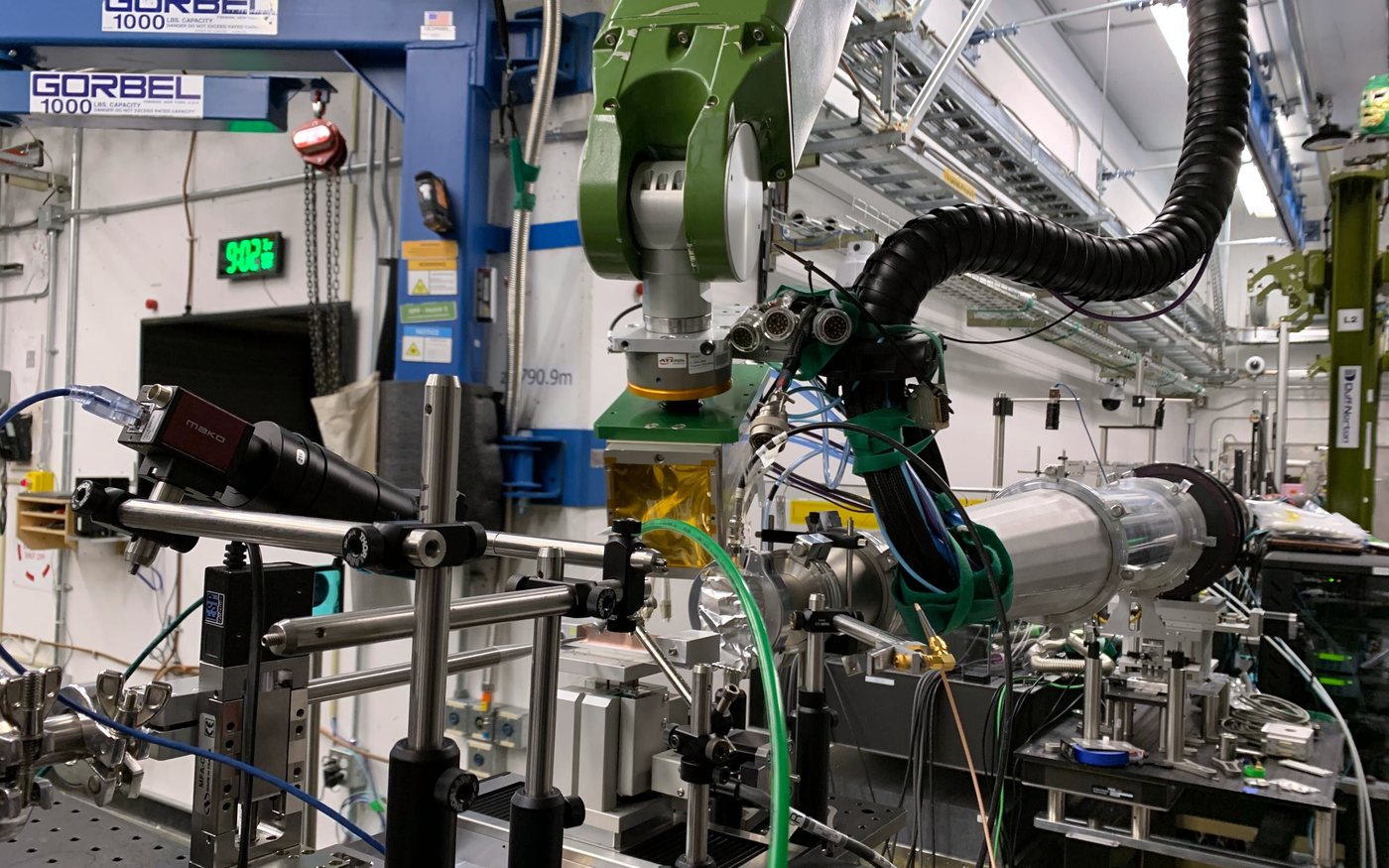
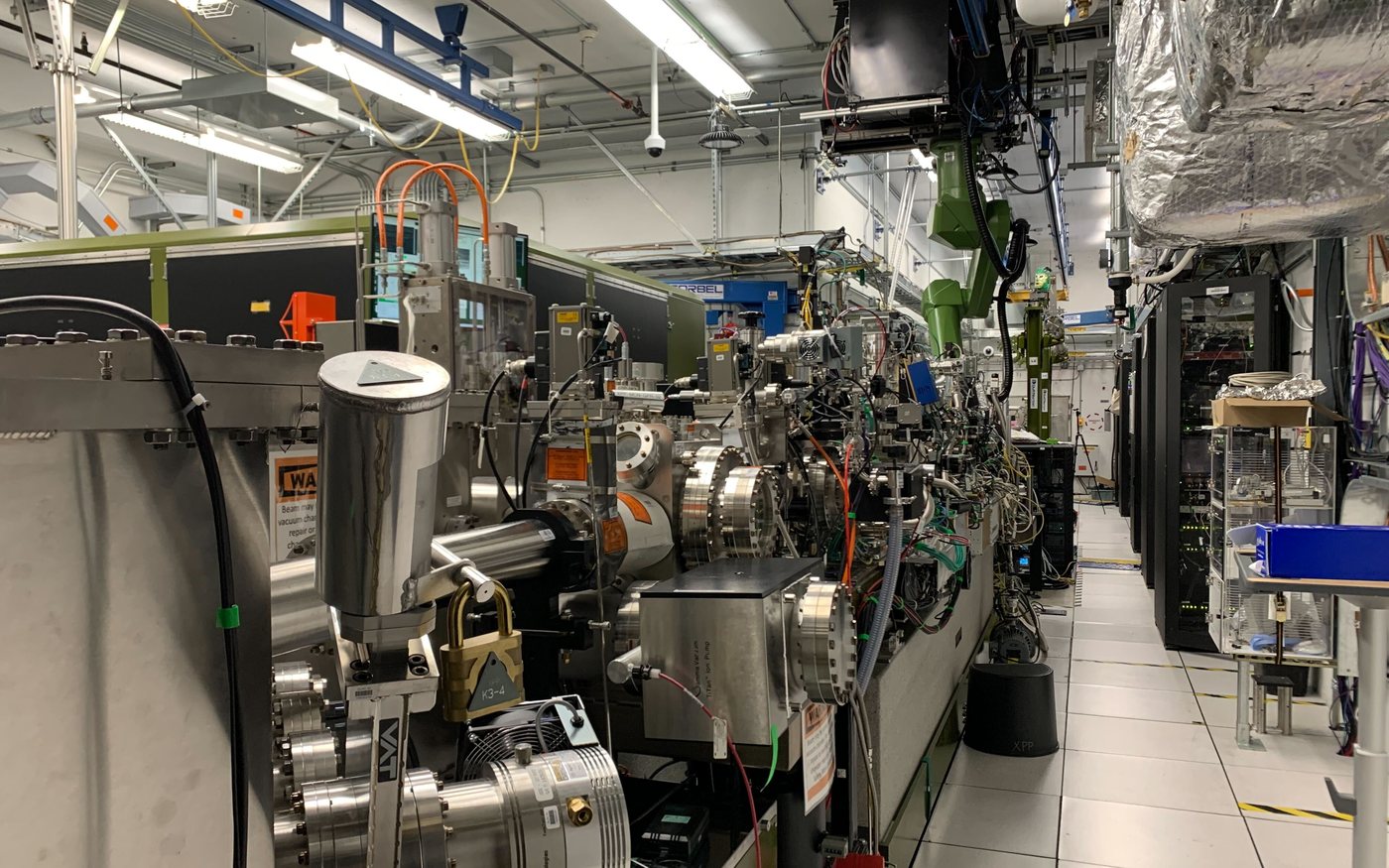
Laser pump–X-ray probe at the free-electron laser. An optical laser pulse excites the sample and the X-ray pulse probes it a controlled delay later, with SAXS and WAXS recorded simultaneously, so nanoscale structure and atomic packing are followed together as the sample responds. Used to resolve transient melting and structural dynamics in metal films.
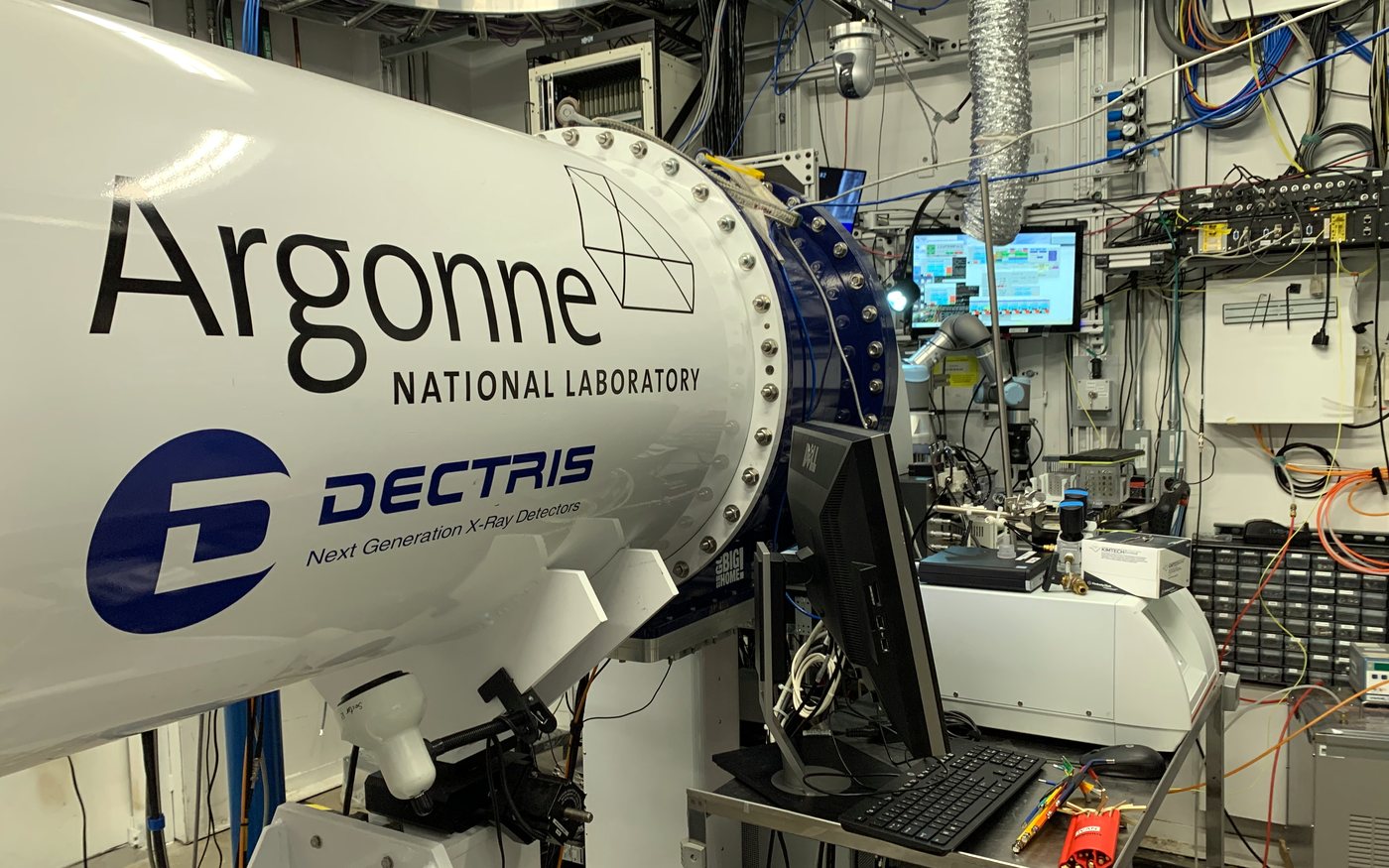
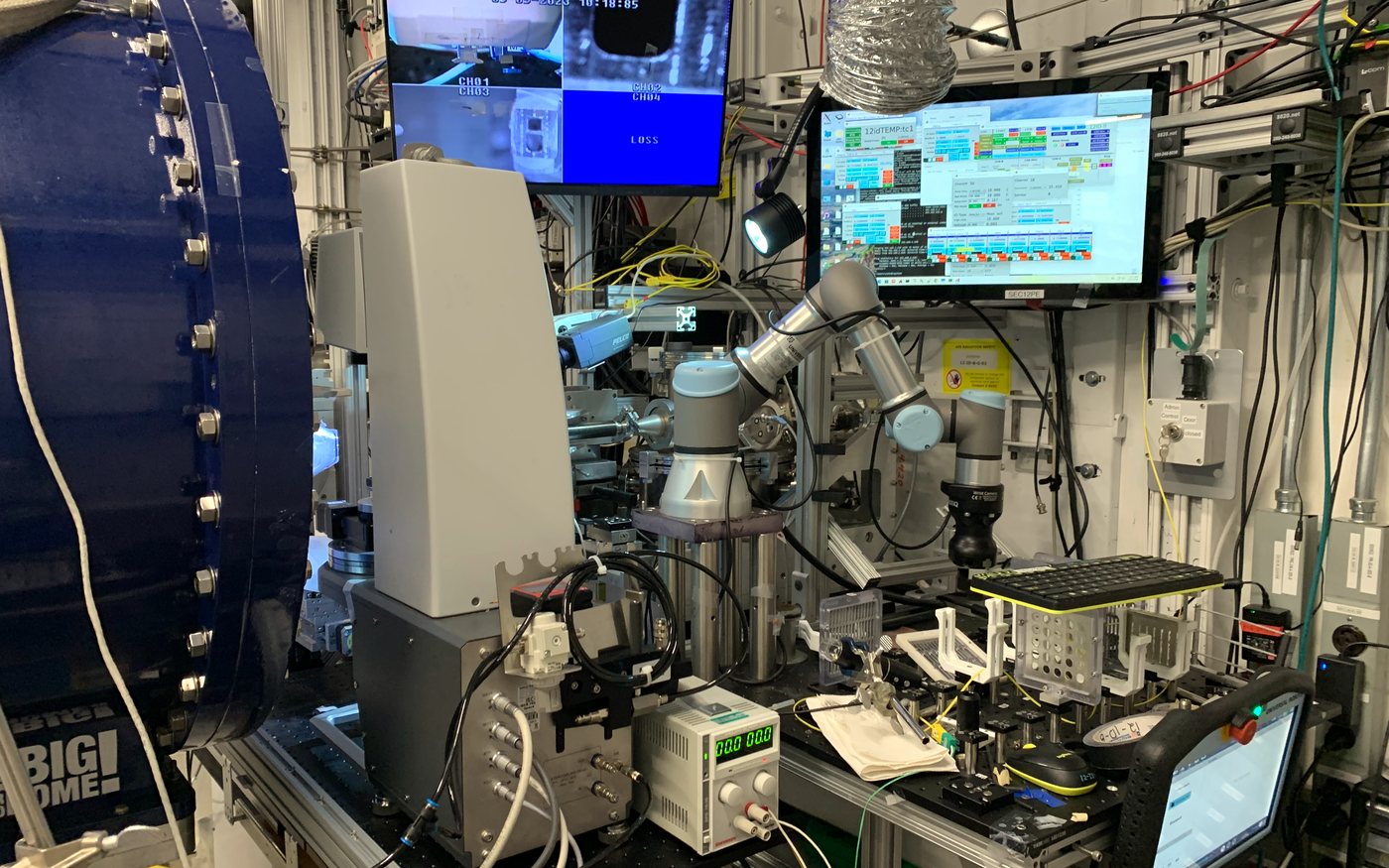
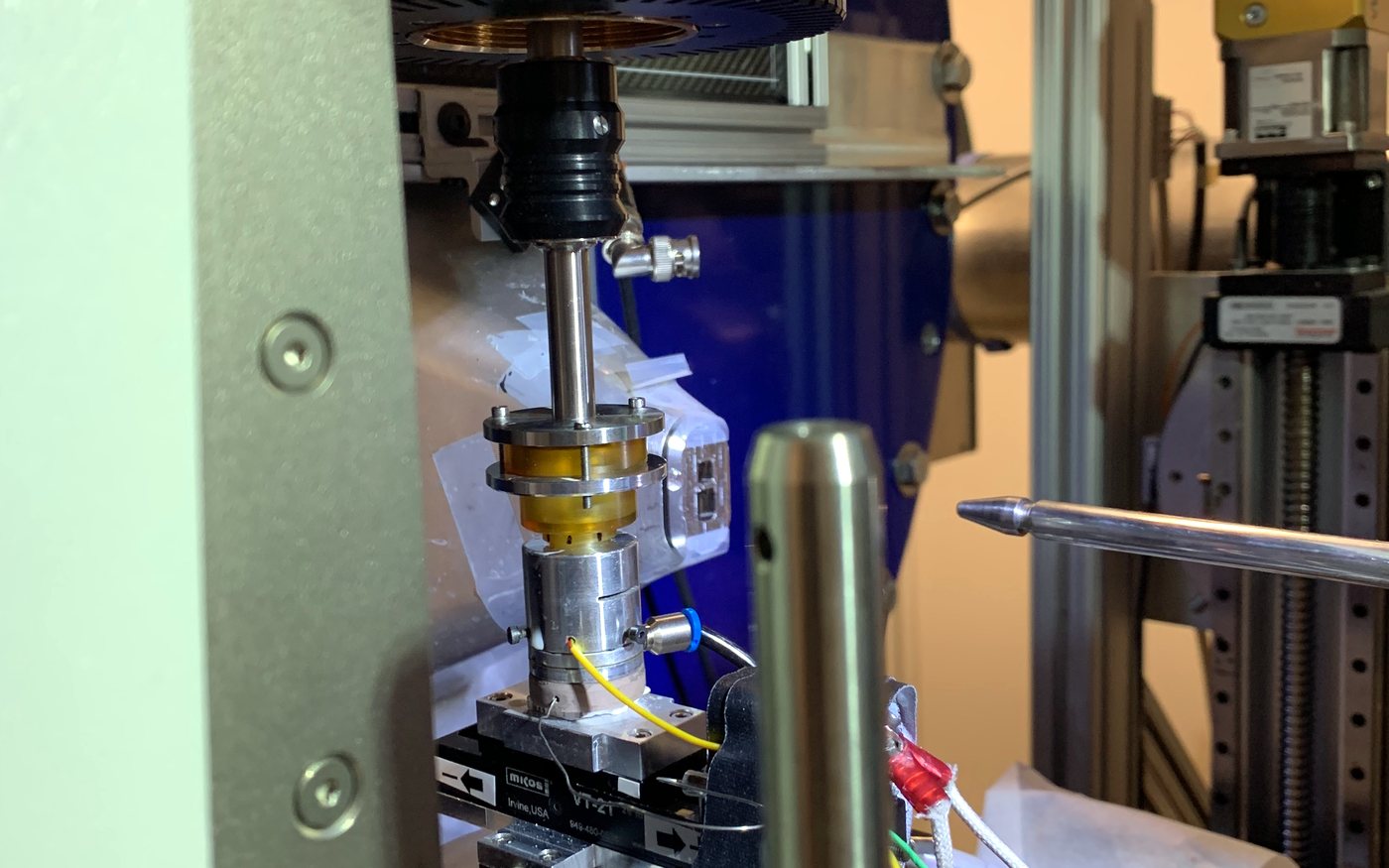
RheoSWAXS: simultaneous small- and wide-angle scattering while a sample is sheared, so flow-induced structure, orientation and crystalline packing are followed together as the rheology develops.
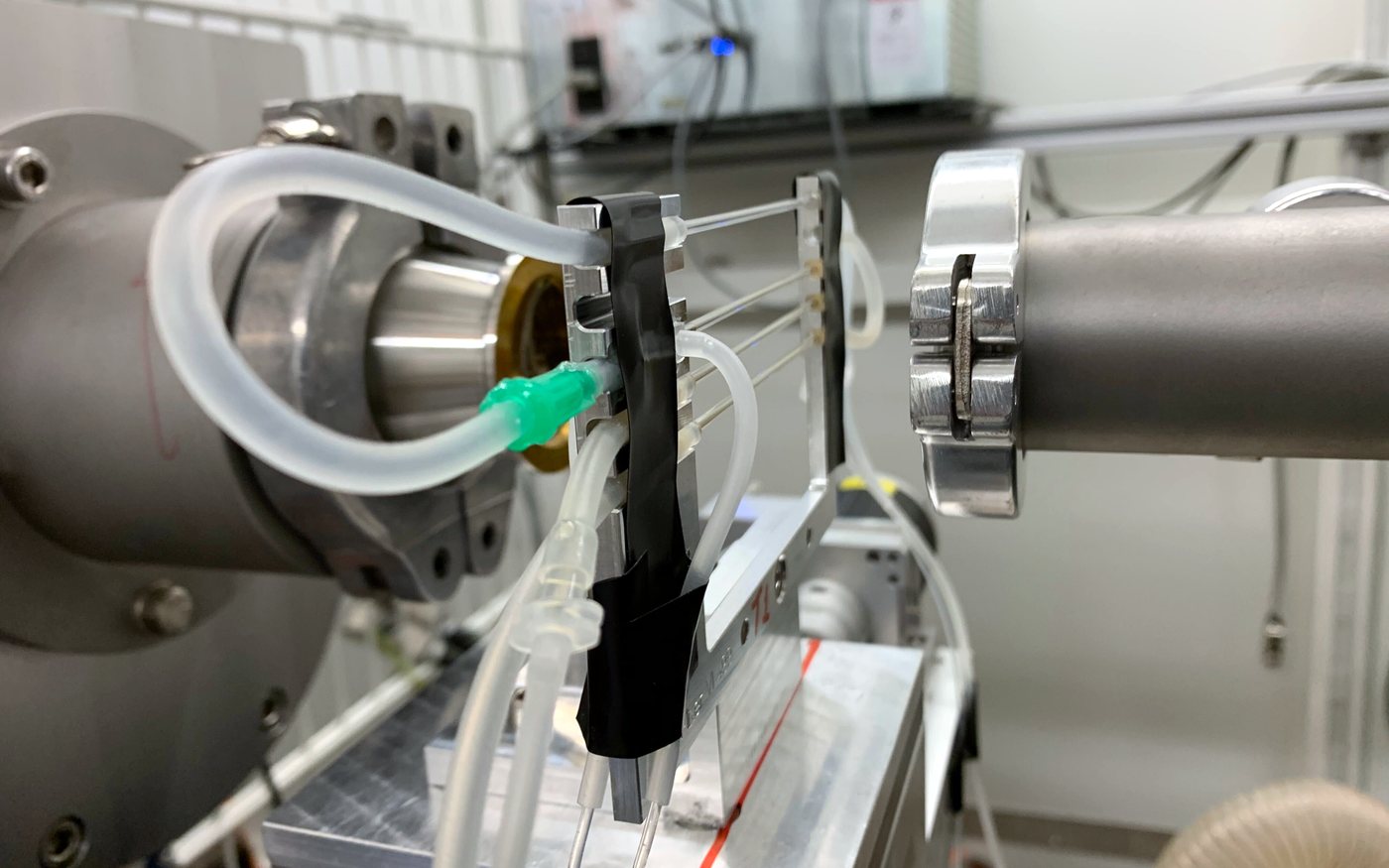
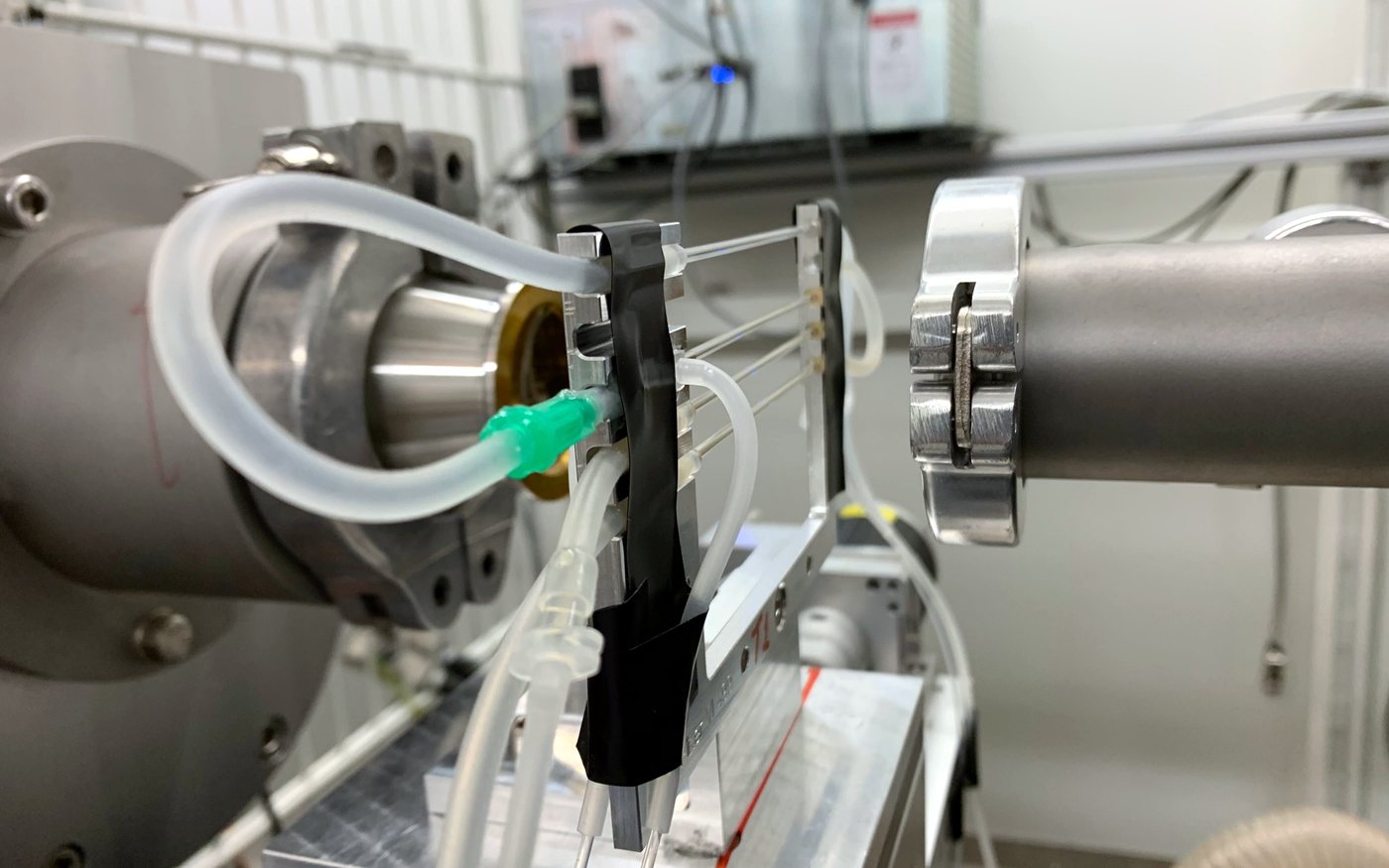
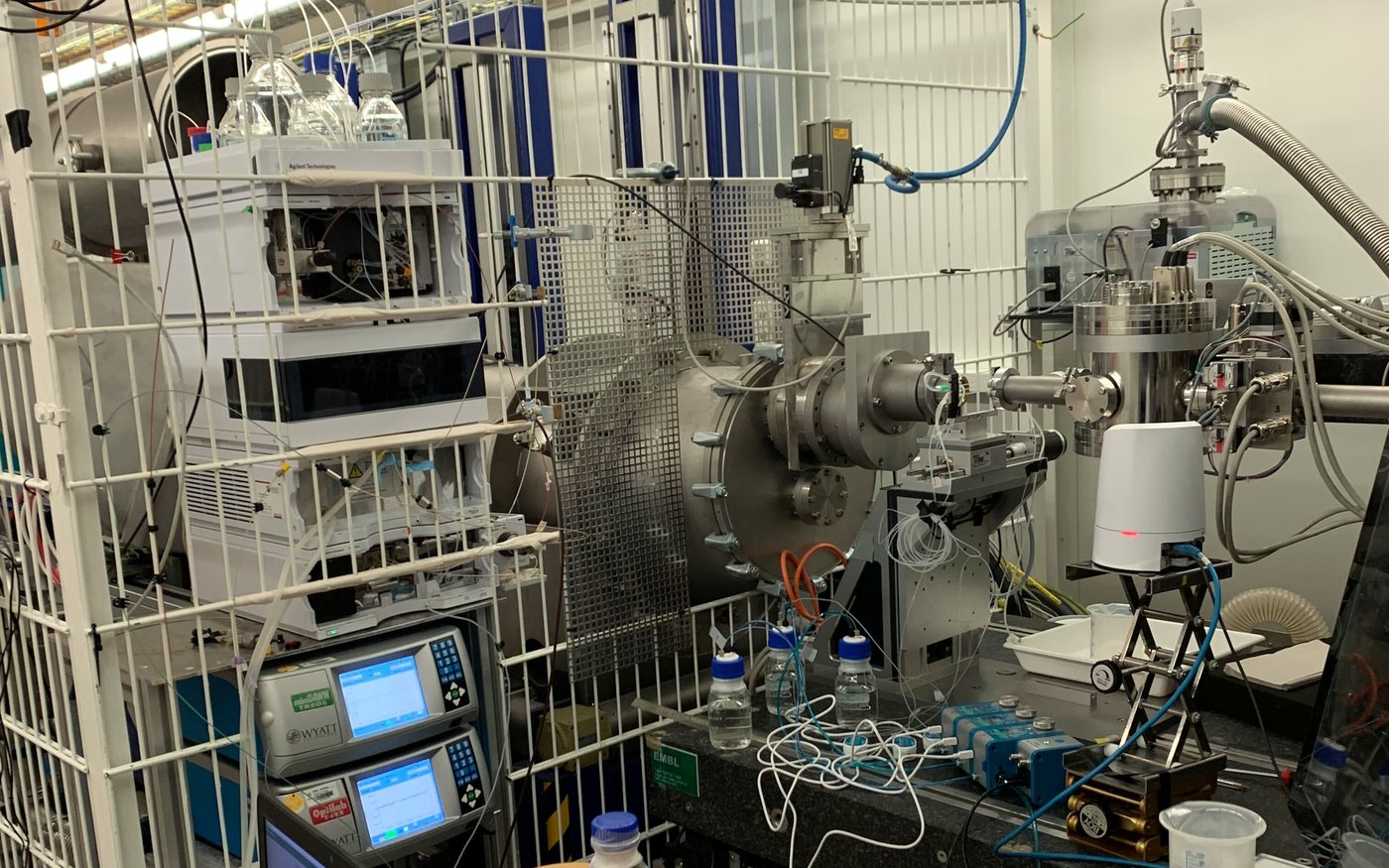
Reagents are mixed in a microfluidic cell mounted in the beam, so SAXS follows nucleation and the earliest stages of nanoparticle growth from solution. Position along the channel maps to residence time, which sets the accessible time resolution.
Built the microfluidic mixing setup and integrated it into the beamline for in situ nucleation and growth studies.
The Materials Science beamline: high-resolution powder diffraction for phase and structure determination.
X-ray pair distribution function measurements, reaching local and medium-range order in disordered and amorphous materials.
Whether it is your first proposal or a tricky in situ environment, I am happy to help think through the measurement.
SLAC National Accelerator Laboratory, Stanford University, USA
Developing a soft matter research group using synchrotrons and free-electron lasers, and building autonomous experimental platforms integrating X-ray capabilities at SSRL with AI/ML.
SLAC National Accelerator Laboratory, Stanford University, USA
Multiscale structural characterization of bioplastics and recyclable polymers; built SSRL platforms combining SAXS/WAXS with in situ tensile, heating, microfluidic and reaction environments; developed real-time Python analysis pipelines; conducted ultrafast pump–probe scattering at LCLS.
Empa, Swiss Federal Laboratories for Materials Science and Technology (ETH Domain), Switzerland
Designed in situ SAXS/WAXS experiments with microfluidic, tensile, thermal, electrical and humidity stimuli; studied nanoparticle nucleation and growth; built structure–property relationships in nanofibrous polymers.
Infineon Technologies AG, Neubiberg, Germany
Developed MATLAB/Python tools to analyze experimental data and benchmark simulations; built material models in COMSOL and Ansys.
Laboratoire Kastler Brossel, UPMC/ENS, Paris, France
Fabricated optical microfiber knot/loop resonators for quantum-dot coupling to study light–matter interactions.
Indian Institute of Technology Guwahati, India
Ultra-thin silicon by HWCVD/PECVD; DFT study of band-gap tunability in bilayer graphene and silicene; KNN ferroelectric thin-film capacitors by RF sputtering; ZnS thin films for photovoltaics.
Stanford University Graduate School of Business, USA
Marketing, operations, strategy, accounting, finance and economics; design thinking, leadership and pitching; developed a commercialization plan for a new venture.
Empa (ETH Domain) & University of Bern, Switzerland
Thesis: Multiscale structural decoding of fibers and designing responsive nanofibrous materials.
Technical University of Munich, Germany (Erasmus Mundus, MaMaSELF)
Thesis: Optimization of thermoelectric properties of conducting polymer thin films by dedoping and hybrid approaches.
University of Rennes 1, France (Erasmus Mundus, MaMaSELF)
Indian Institute of Technology Guwahati, India
Thesis: Fabrication and characterization of silicon ultra-thin films prepared by HWCVD.
Young Scientist Award to attend the SAS2022 International Conference
IUCr Young Scientist Award
Best Poster, EXCITE Biomedical Imaging Summer School, ETH Zurich
Erasmus+ Scholarship, European Union
World Quantitative and Science Scholarship, WorldQuant Foundation
Institute Merit-cum-Means Scholarship, IIT Guwahati
Top 0.1% in IIT-JEE, among roughly one million candidates
Hindi (native) · English (native) · German (A2) · French (A2)
I am always glad to hear from people working on related problems. Whether you have a question about scattering data, an idea for a collaboration, or you are a student looking for a way into this field, please do reach out.
Plastics deconstruction and recycling, polymers and soft materials, or anything suited to in situ X-ray scattering.
Experiment design, data reduction, or analysis. Happy to talk through a problem or point you to the right tool.
Planning a measurement at SSRL or another synchrotron, or curious about autonomous experimental platforms.
Advice on getting started in scattering, or interest in joining the group I am building at SLAC.
I would be glad to hear about it: questions, collaborations, and student enquiries are all welcome.